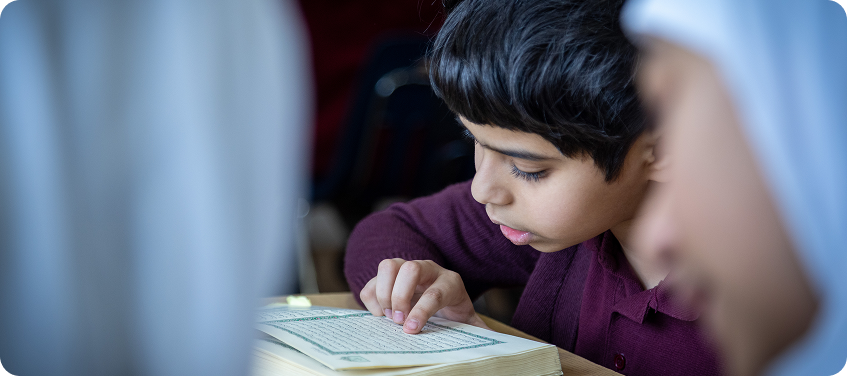
Early Childhood
Program
Table of Content:
Table of Content:
Overview
The age of four is a time of remarkable growth and development, marking a period of rapid changes in a child’s cognitive, social-emotional, and physical abilities. This transformative year of exploration and discovery requires more than just a one-size-fits-all curriculum to meet the unique needs of each child’s personal development. At Hamza Academy, our Pre-Kindergarten program is specifically designed to offer a balanced combination of support and challenge, allowing every child to embark on their individual learning journey. As pioneers in early childhood education, we integrate research-based teaching methods with proven, traditional practices to provide your preschooler with a strong foundation in both knowledge and skills. Our experienced and caring teachers are attentive to each child’s needs, utilizing a variety of teaching strategies and engaging multiple learning styles—auditory, visual, and tactile—to ensure that every four-year-old is prepared to thrive in kindergarten and beyond.
By the end of the school year, our Pre-K students will have developed essential early literacy skills, a solid grasp of foundational math concepts, and the socio-emotional maturity needed to transition confidently into Kindergarten.
Reading Readiness (ELA)
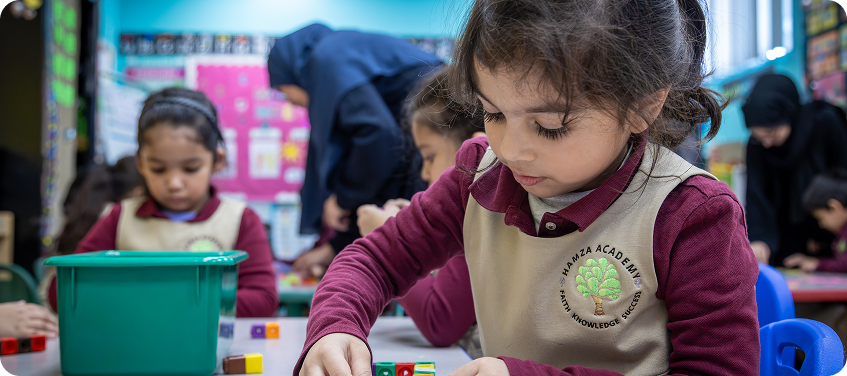
Our Pre-K program uses McGraw-Hill’s World of Wonders curriculum to foster strong reading readiness skills in alignment with the New York State Prekindergarten Learning Standards for English Language Arts. Students begin by recognizing letters, learning their sounds, and developing phonemic awareness through songs, rhymes, and engaging read-alouds. The curriculum emphasizes oral language development by encouraging children to share stories, ask questions, and express themselves in full sentences. Children build vocabulary and comprehension through exposure to classic and contemporary children’s literature. They explore story structure—beginning, middle, and end—and identify characters, settings, and major events. Teachers guide students in developing early writing skills by encouraging them to draw, scribble, and label pictures to represent their thoughts. Fine motor development is supported through activities such as tracing letters, using scissors, and manipulating small objects. Listening skills are strengthened through story time and classroom conversations, preparing students to follow directions and participate in group discussions. The program also builds social-emotional literacy by including stories that highlight emotions, friendships, and problem-solving. Rich visual supports and interactive digital tools enhance learning and make reading accessible to all learners. Centers are used to provide small-group and individual practice in letter recognition, rhyming, and emergent writing. Each activity is play-based and intentionally designed to support early literacy development. By the end of Pre-K, students are confident in recognizing letters and sounds, engaging with books, and expressing themselves through early reading and writing skills, setting the stage for success in Kindergarten and beyond.
Math Readiness
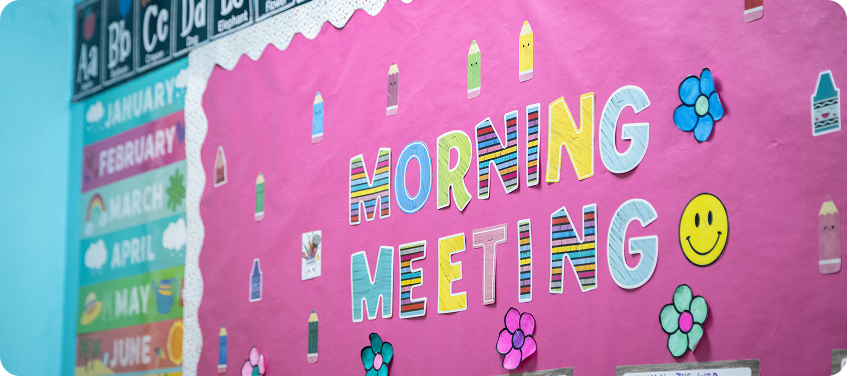
Our Pre-K program uses McGraw-Hill’s World of Wonders curriculum to foster strong reading readiness skills in alignment with the New York State Prekindergarten Learning Standards for English Language Arts. Students begin by recognizing letters, learning their sounds, and developing phonemic awareness through songs, rhymes, and engaging read-alouds. The curriculum emphasizes oral language development by encouraging children to share stories, ask questions, and express themselves in full sentences. Children build vocabulary and comprehension through exposure to classic and contemporary children’s literature. They explore story structure—beginning, middle, and end—and identify characters, settings, and major events. Teachers guide students in developing early writing skills by encouraging them to draw, scribble, and label pictures to represent their thoughts. Fine motor development is supported through activities such as tracing letters, using scissors, and manipulating small objects. Listening skills are strengthened through story time and classroom conversations, preparing students to follow directions and participate in group discussions. The program also builds social-emotional literacy by including stories that highlight emotions, friendships, and problem-solving. Rich visual supports and interactive digital tools enhance learning and make reading accessible to all learners. Centers are used to provide small-group and individual practice in letter recognition, rhyming, and emergent writing. Each activity is play-based and intentionally designed to support early literacy development. By the end of Pre-K, students are confident in recognizing letters and sounds, engaging with books, and expressing themselves through early reading and writing skills, setting the stage for success in Kindergarten and beyond.
Social and Emotional Development
Our program places a strong emphasis on supporting the social-emotional growth of every child, recognizing it as the foundation for academic and lifelong success. Aligned with the New York State Prekindergarten Learning Standards, we intentionally create a safe, nurturing environment where children feel seen, heard, and valued. From the first day, students learn how to express their feelings, recognize emotions in others, and begin to manage their responses through age-appropriate strategies. Teachers model empathy, patience, and positive communication, guiding students to build healthy relationships with peers and adults. Daily routines and classroom expectations help children feel secure and teach important skills like cooperation, sharing, and taking turns. Children are given opportunities to make choices, solve problems, and practice independence in a supportive setting. We use stories, songs, role-play, and discussions to explore themes like kindness, fairness, and friendship. Visual cues, calm-down spaces, and social stories help children navigate strong emotions and conflicts. Circle time and group activities encourage active listening, respectful speaking, and a sense of belonging. Teachers observe and support each child’s social-emotional development, offering individualized guidance when needed. Family partnerships are encouraged to ensure consistency between home and school in supporting children’s emotional needs. Students learn to take pride in their achievements and develop resilience when faced with challenges. By learning how to name their feelings and advocate for themselves, children build confidence and self-awareness. Our goal is to equip students with the emotional tools they need to thrive socially and academically. By the end of Pre-K, children have developed a strong foundation of emotional intelligence, empathy, and interpersonal skills that prepare them for the next stage of learning.
Al- Quran
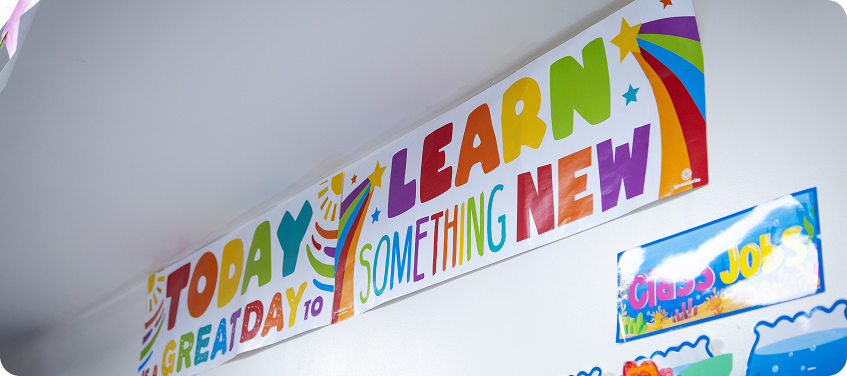
The Qur’an plays a central role in the daily lives of students, guiding their actions, character, and spiritual development. In our teachings, we ensure that students not only recite the Qur’an regularly but also understand the deeper meanings behind its beautiful Surahs. By connecting the verses to real-life situations, we help students appreciate the timeless wisdom and moral lessons within the Qur’an. This approach fosters a stronger connection to their faith and encourages them to embody the values of kindness, patience, and gratitude in their everyday interactions. Understanding the meaning behind the words allows the Qur’an to become a source of inspiration and guidance, rather than just memorized text. Students in Pre-K memorize Surah Al Fatiha, An-nass, Al Falaq, Surat Al Ikhlas, Al Massad, An-nasr. Surat Al Kafirun, Al Kawthar, Al- Ma’un. Also, they will learn how to read Al Qaida Al Noorania from Lessons 1 through 5 with Tajweed